|
NOTE:
You have reached an information page.
To view
product prices visit our store at
Seedland.com |
|

ORDER
ONLINE |
PHONE ORDERS:
PHONE
Phone Business hours - Mon-Fri. 9-5 EST ONLY - Contact via
Email
 |
| Maintenance:
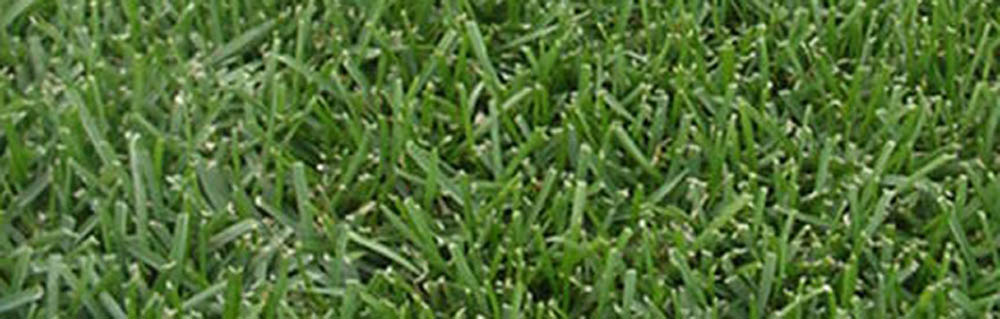
Centipede grass has probably the lowest maintenance of the
warm season grasses. Its popularity stems from the
tenacity to grow on poor, sandy soils to clay based ones.
Needing little fertilization and not
needing to be mown as much makes it a preferable for busy
lifestyles.
THIN LAWN? - READ MORE ABOUT
OVERSEEDING
EXISTING CENTIPEDE LAWNS |
 |
In normal average rainfall years
it can do very well with just a little care. Once a
year weed-n-feed program kills the few weeds that might emerge and
feeds enough for the year. Or divide the requirements into
seasonal fertilization schedules. The texture is said to be
coarser than the so-called better grasses, but this may be
due to the lack of moisture in a given season. Proper care in
maintenance (mowing or watering) and this grass will compete
against weeds on its own. Definitely not suited for higher traffic
areas and slow to repair but I have found this grass to be a
"take care of on the run grass" for busy lifestyles. As
long as it doesn't get mown too short between times
Read our FAQ (frequently asked
questions) page for more information about centipede grass.
NCSU Cooperative Extension:
Centipedegrass Lawn Maint. Calendar AG-381
University of Georgia CES:
http://pubs.caes.uga.edu/caespubs/pubcd/L313-w.html
HAVE
LAWN QUESTIONS YOU NEED ANSWERED?
VISIT GARDENWEB.COM's - LAWN
FORUM
TWO KEY MAINTENANCE
SUGGESTIONS:
1) Do
NOT over-fertilizer - Centipede cannot handle a lot of fertilzier.
2) Do
NOT mow low - Centipede mowed lowed becomes stressed out and thuse
tend to have problems or even die out.
Centipede is resistant to most
disease and insects with the main problem being the build up of
thatch. Early spring raking can take care of this problem easily
and using a bag catcher when mowing. The main importance of
getting a good lawn from centipede is to have the site as free
from deviations in ground level as possible. This grass will be
mown quite low and every hill or bump will result in the grass
getting scalped and the roots will die and centipede does not
repair quickly.
Maintenance: Low to medium with yearly fertilization and
possible additions of iron sulfate or chelate on heavier soils
with pH higher than 7.2 and on sandy soils higher than 6.5;
regular mowing and watering when necessary. Potassium might have
to be added in the spring and fall to encourage root development
and help to winterize the lawn.
Watering: In the starting stages the
ground should be kept moist, not soaked until established
seedlings take root. Water four to eight (depending upon
sandiness) inches deep at the time to establish a deeper root
system because centipede is not as drought tolerant as some other
grasses. Shallow watering only provides for the root system to
establish just under the soil. Medium to low water usage
depending upon the weather. In drought conditions water
thoroughly as with all grasses.
Mowing Depends upon growth and the lawn you want to
achieve. Proper mowing should be determined by
1 ˝ - 2 inches - www.lawn-mowing.com
Weeding: Early spring application of herbicides for
crabgrass and annual weeds and a hormone type for broadleaf weeds.
Fertilization: Low to medium if at all with nitrogen and
potassium and no phosphorus as this depletes the iron
levels; a good application would be 15-0-15. 16-4-8 is
also a recommended fertilizer for Centipede. Centipede is
not responsive to high rates of fertilizers. Fertilizer
should be added at the time of planting, with additional yearly
application. Iron chlorosis can be a problem.
Chelated or ferrous sulfate is recommended for improving the iron deficiency
--- Also balancing the pH to a more acidic level can help.
It adapts best to a soil pH of 5.0 to 5.5.
Weed Control is needed in the winter to
discourage weed growth while the grass is dormant in the cooler
areas. Herbicides of a hormonal type can be used at this time for
the broad-leafed weeds and other weeds can be controlled with
pre-emergence herbicides.
Diseases that are common are brown patch
and dollar spot.
Ryegrass Overseeding - Most experts
recommend that you do NOT overseed your centipede lawn with a
winter ryegrass. It can in some situations result in
thinning out (killing) of your lawn over time due to the added
stress of early spring competition. Fescue in general is a
better overseed variety to use (not ryegrass). However in
general the best recommendation is to do nothing.
Pests that affect Centipede include
nematodes and ground pearls. Nematodes & ground pearls can
usually be prevented by keeping the moisture level up since each
grows well in sandier, drier areas. Your last resort will be
fumigation of the soil for nematodes infestations. Nematodes
are the most serious of the pest problems affecting Centipede
grass. Infected areas will show heavy wilt even under good
watering practices. Other insects affecting Centipede are
spittlebugs, sod webworms, mole crickets, caterpillars and grubs.
Centipede decline is a problem in some
centipede lawns. this occurs after a few years of an
established lawn's life and is usually indicative or some
underlying problems. Symptoms are yellow spots in lawn (also
caused by iron chlorosis) and dead spots in spring growth.
Causes of the decline can be any one or combination of these
practices or conditions:
- Excessive nitrogen applications
- High Soil pH (Greater than 6.5)
- Nematodes and other organisms.
- Excessive thatch causing cold damage to roots.
| Centipedegrass
- Centipede Decline |
| |
|
Centipede.com
Growing
a beautiful tomorrow!® |
|
|